


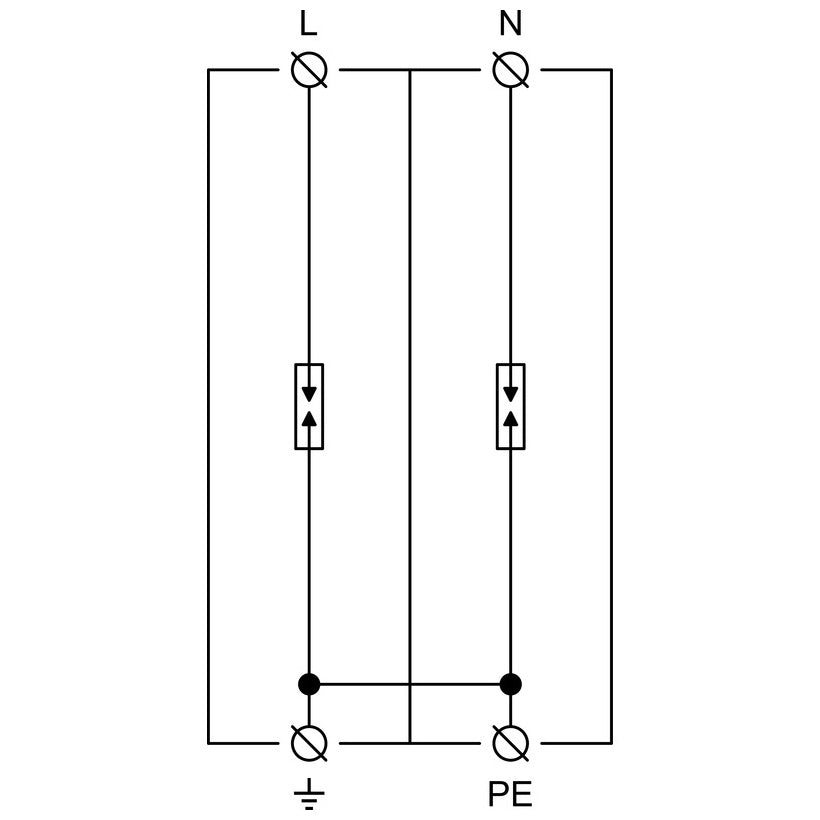
The HLA50-255/2+0 from Hakel is a Type 1 surge protection device configured for single phase systems (L–N) with a 2+0 protection arrangement, designed to handle high energy lightning currents at the service entry point of a low voltage installation. It is typically installed at the main distribution board, where it provides primary protection by diverting incoming surge energy safely to earth before it can propagate into downstream circuits.
In practical applications, this configuration is commonly used in single phase installations or sub-distribution boards, including commercial buildings, telecom sites, small industrial systems, and critical loads where incoming feeders are exposed to lightning or switching transients. The 2+0 configuration ensures effective protection between line and neutral, making it suitable for installations where neutral is solidly earthed and coordinated protection is required at the entry level.
Technically, the HLA50-255/2+0 utilises spark gap technology, enabling it to withstand and discharge high impulse currents associated with lightning events (10/350 µs waveform). Under normal operating conditions, the device remains inactive with negligible leakage current. During a surge event, it provides a controlled discharge path, safely diverting energy to earth. Once the surge subsides, the device resets automatically without the ageing effects typically seen in MOV based devices, ensuring long term reliability in high energy environments.
From a system design perspective, the HLA50-255/2+0 forms the first stage of a coordinated surge protection scheme. It absorbs the bulk of the surge energy, allowing downstream Type 2 and Type 3 SPDs to further clamp residual voltages to levels suitable for sensitive equipment. This staged approach ensures both effective protection and extended service life of downstream devices.
Proper installation is essential for optimal performance. The device should be connected using short, low impedance conductors, and the earthing system must be designed to efficiently dissipate surge energy. Attention should also be given to upstream protection coordination and system earthing configuration to ensure correct operation of the SPD.